Industry specific SEO in 2026 means understanding that different verticals see different AI Overview trigger rates, different zero-click rates, and different competitive landscapes. A generic SEO playbook is wrong for at least one of the three. Law firms, dentists, and hospitality each need a strategy calibrated to how their actual customers actually search in their actual vertical.
Quick answer: Industry specific SEO in 2026 requires customizing the strategy to your vertical's query mix. Transactional and navigational queries (hire a lawyer, book a hotel, dentist near me) trigger AI Overviews less than 2 percent of the time, so traditional Google ranking still drives most clicks. Informational queries trigger AI Overviews 80 to 88 percent of the time, so content for the research stage of the buyer journey needs to be structured for AI extraction. Long-tail keywords account for roughly 70 percent of all queries. Local SEO, schema markup, and Google Business Profile management are non-negotiable in every vertical.
I have been doing SEO for 25 years, with the last five years focused heavily on the legal vertical (representing one of the most competitive local-search categories anywhere). What I have watched in 2026 is that the SEO advice published for "businesses" generically is wrong for most specific industries, and the businesses winning are the ones whose strategy is tailored to their vertical's actual query patterns, customer behavior, and competitive landscape.
What follows is the data behind why industry specific SEO matters more in 2026 than in any prior year, and the custom playbooks for three high-value verticals: law firms, dental practices, and hospitality.
How search has actually changed by 2026
Google processes over 8.5 billion searches per day. AI Overviews reach more than 2 billion monthly users. The global SEO services market is roughly $83.9 billion in 2026 and forecasts suggest $148 billion by 2031. Organic search still drives about 53 percent of all website traffic, and organic leads close at an average rate of 14.6 percent.
The pressure on traditional search is real but uneven. By the end of 2025, over 60 percent of all Google searches and 77 percent of mobile searches ended in zero-clicks. Gartner forecast a 25 percent drop in traditional search volume by 2026 due to AI chatbots. ChatGPT now holds about 17.1 percent of digital queries with 858 million users. Google still dominates at 77.9 percent, with Bing, Perplexity, and others picking up the remaining 5.8 percent.
The number that matters most for industry specific SEO is AI Overview trigger rate by query type:
Informational queries: 80 to 88 percent trigger AI Overviews. ("How long does a personal injury claim take?" "How often should I get a cleaning?" "What is the best neighborhood to stay in Miami?")
Commercial queries: 8.69 percent trigger AI Overviews. (Mid-funnel research before a purchase decision.)
Transactional queries: 1.76 percent trigger AI Overviews. ("Book a hotel in Boca Raton tonight." "Schedule a personal injury consultation.")
Navigational queries: 1.43 percent trigger AI Overviews. ("Dentist near me." "Law firm in Delray Beach.")
The implication is that for transactional and navigational queries (which is where most lawyer, dentist, hotel, and restaurant revenue lives) traditional Google ranking still drives the click. The number one organic result still receives about 27 percent of clicks on those queries. The AI Overview disruption is happening to informational queries, not to the queries that close business directly.
The other constant: long-tail keywords account for roughly 70 percent of all search queries. Specific phrases ("car accident attorney in Delray Beach," "child-friendly dentist in Boca Raton," "pet-friendly hotel in Delray Beach with pool") have lower competition and higher conversion intent than the broad head terms most generic SEO advice targets.
Custom SEO strategy for law firms
Law firms compete on high-value transactional queries: "personal injury lawyer," "divorce attorney," "DUI lawyer near me," "estate planning attorney." Transactional queries trigger AI Overviews only 1.76 percent of the time, so the traditional top-of-page result still gets the click and the case.
Focus the SEO investment on transactional and navigational rankings. The number one Google result on a transactional legal query gets roughly 27 percent of clicks. Page two does not exist. The fight is to rank in the local pack and the top three organic results for the queries that produce actual case intake.
Build out long-tail city + service pages. Not "DUI lawyer," but "DUI lawyer in Delray Beach," "first-offense DUI attorney in Boca Raton," "boating-under-the-influence lawyer Palm Beach County." Long-tail keywords with city qualifiers produce 70 percent of total query volume across the legal vertical and they convert.
Citation consistency across legal directories. Avvo, Justia, FindLaw, Martindale, Lawyers.com. NAP consistency across all of them signals legitimacy to Google. Inconsistent NAP across directories is one of the most common reasons legal local rankings drop.
Win the informational layer with FAQ content. "How long does a personal injury case take?" "What does a DUI lawyer cost?" "Can I sue if I was partly at fault?" These informational queries trigger AI Overviews 80 to 88 percent of the time. Well-structured FAQ content with FAQPage schema gets cited as the source in those AI Overviews, which builds brand recognition that converts to direct branded searches later.
Google Business Profile is the highest-value asset. 77 percent of mobile searches in 2025 ended in zero-clicks, often because the GBP panel answered the question (phone number, address, hours, reviews) without the user clicking through to the site. A maxed-out GBP captures those zero-click conversions before any other channel sees them.
Custom SEO strategy for dentists
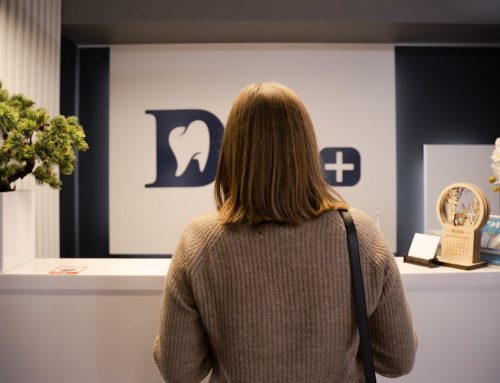
Dental queries skew navigational and transactional. "Dentist near me," "emergency dentist," "teeth whitening Boca Raton." Both of those query types trigger AI Overviews under 2 percent of the time, so traditional ranking still drives the appointments.
Win the local pack first. The local pack (the three featured GBP listings plus a map) is the most visible element on a dentist query. A complete GBP with all services listed, current photos, accurate hours, and a steady stream of recent reviews is the single highest-leverage investment.
Long-tail keyword expansion. "Child-friendly dentist in Boca Raton," "sedation dentistry for anxious patients," "Invisalign provider Delray Beach." These specific queries convert at higher rates than the broad head terms and face less competition. Each one becomes its own page on the site.
Patient-question FAQ content for the informational layer. "Does Invisalign hurt?" "How often should I get a cleaning?" "Are dental implants covered by insurance?" Informational dental queries trigger AI Overviews at the 80 to 88 percent rate. Practices that publish well-structured answers get cited and build authority.
LocalBusiness and MedicalBusiness schema. Both schemas help search engines understand what services the practice offers. MedicalBusiness schema is specifically important for AI engine citation on health-related queries.
Review velocity as a ranking signal. Dental practices that maintain a steady stream of new reviews (not a spike followed by silence) rank higher in the local pack. The post-appointment review request becomes part of the operational process.
Custom SEO strategy for hospitality
Hotels, resorts, and restaurants face a unique query mix: high transactional volume (booking and ordering) plus high informational volume (research, planning, recommendations). The transactional queries still convert through traditional ranking. The informational queries are where AI Overviews are extracting traffic.
Destination and neighborhood guides for the research stage. "Things to do in Miami," "best beachfront hotels in Boca Raton," "where to eat in Delray Beach." These informational queries trigger AI Overviews 80 to 88 percent of the time. A hotel or restaurant that publishes the authoritative local guide gets cited as the source in those Overviews, which drives brand awareness that converts at the booking stage later.
Long-tail booking queries. "Pet-friendly hotel in Delray Beach with pool," "romantic weekend getaway Palm Beach," "rooftop bar in Boca Raton with view." These specific queries convert at higher rates and face less competition than head terms. Each becomes a dedicated landing page.
Schema markup for Hotel, Restaurant, Menu, OfferAvailability, Event, and Review. Rich snippets with star ratings, price ranges, and availability increase click-through from traditional search and increase citation rates in AI travel recommendations.
Multi-directory presence. Google Business Profile, TripAdvisor, Yelp, Booking.com, OpenTable, Resy. NAP consistency across all of them. Reviews flowing across all of them. AI engines pull review signals from across the directory ecosystem, so a positive reputation on TripAdvisor reinforces Google ranking and vice versa.
Concise opening paragraphs on every page. ChatGPT and other generative AI tools often extract the first paragraph of a page when generating recommendations. Put the location, amenities, price range, and unique selling point in the opening lines so the AI has what it needs to cite you accurately.
Integrating SEO, AEO, and GEO across every vertical
Three optimization frames coexist in 2026 and all three matter for every industry.
Traditional SEO targets organic ranking and click-through traffic. Still the primary revenue driver for transactional and navigational queries.
Answer Engine Optimization (AEO) structures content for AI summaries, featured snippets, and Google AI Overviews. The frame for informational queries where the AI takes the click.
Generative Engine Optimization (GEO) improves citation in generative AI tools (ChatGPT, Perplexity, Claude). The frame for brand awareness when AI tools recommend businesses inside their answers.
The most effective strategy in every industry combines all three. Clear H2 question headings and FAQPage schema for AEO. Long-tail keyword targeting and traditional on-page SEO for SERP ranking. Authoritative content that AI engines cite for GEO. Industry by industry, the weight shifts but the trio stays.
| Industry | Primary query type | AI Overview pressure | Highest-leverage investment |
|---|---|---|---|
| Law firms | Transactional + navigational | Low (1-2% trigger) | Local pack + transactional page ranking + GBP optimization |
| Dentists | Navigational + transactional | Low (1-2% trigger) | GBP completeness + review velocity + long-tail service pages |
| Hospitality | Mixed transactional + informational | High on informational (80-88%) | Destination/neighborhood guides + multi-directory NAP + Hotel/Restaurant schema |
Frequently Asked Questions
What is industry specific SEO and why does it matter in 2026?
Industry specific SEO is the practice of customizing search strategy to a vertical's actual query patterns, customer behavior, and competitive landscape rather than applying generic SEO advice across all industries. It matters in 2026 because AI Overview trigger rates, zero-click rates, and SERP layouts vary significantly by query type, and a generic strategy under-serves at least one of those dimensions in any given vertical.
Do AI Overviews threaten law firm and dental SEO?
Less than most agency posts suggest. Transactional queries (hire a lawyer, schedule an appointment) trigger AI Overviews only 1.76 percent of the time, and navigational queries (dentist near me) only 1.43 percent of the time. Those query types still convert through traditional Google ranking and Google Business Profile panels. The AI Overview pressure is concentrated on informational queries, where the right response is structured FAQ content that AI engines cite.
How important are long-tail keywords for industry specific SEO?
Critical. Long-tail keywords account for roughly 70 percent of all search queries. For local service industries, long-tail city-plus-service queries convert at much higher rates than broad head terms and face significantly less competition. The site that has a dedicated page for each long-tail variant captures traffic the site that has only head-term pages misses entirely.
Should hotels and restaurants invest in informational content?
Yes. Hospitality is the vertical where informational content has the highest strategic value because the research stage of the buyer journey is so long. A hotel or restaurant that publishes the authoritative destination or neighborhood guide gets cited in AI Overviews and ChatGPT recommendations, which builds brand awareness that converts at the booking stage weeks or months later.
What schema markup is most important for each industry?
Law firms: LocalBusiness, Attorney, Service, FAQPage. Dentists: LocalBusiness, MedicalBusiness, Service, FAQPage. Hospitality: LocalBusiness, Hotel or Restaurant, Menu, OfferAvailability, Event, Review. All three verticals benefit from FAQPage schema on FAQ content because that is what gets extracted into AI Overviews on informational queries.
Is SEO still worth the investment given the rise of AI?
Yes, and the SEO market growth from $83.9 billion in 2026 to a forecast $148 billion by 2031 reflects that. Organic search still drives 53 percent of website traffic with a 14.6 percent average close rate. What has changed is that effective SEO in 2026 requires the combined AEO and GEO layers alongside traditional ranking work. SEO is not obsolete. SEO is broader.
How Full Contact SEO handles industry specific clients
The right SEO strategy for a law firm looks different from the right strategy for a dental practice, which looks different from the right strategy for a hotel. We build custom playbooks for each vertical based on the query mix, the competitive landscape, and the customer journey specific to that industry. That is the work that produces compounding rankings rather than generic optimization that leaves leverage on the table.
If you run a law firm, dental practice, hospitality business, or another vertical where the SEO requirements are specific to your industry, the discovery call is worth an hour. We will audit your current visibility, your competitive position, and your channel mix and tell you exactly where the industry-specific leverage is on your site. Schedule a call here.
- Joe Harvey, Full Contact SEO, June 2026